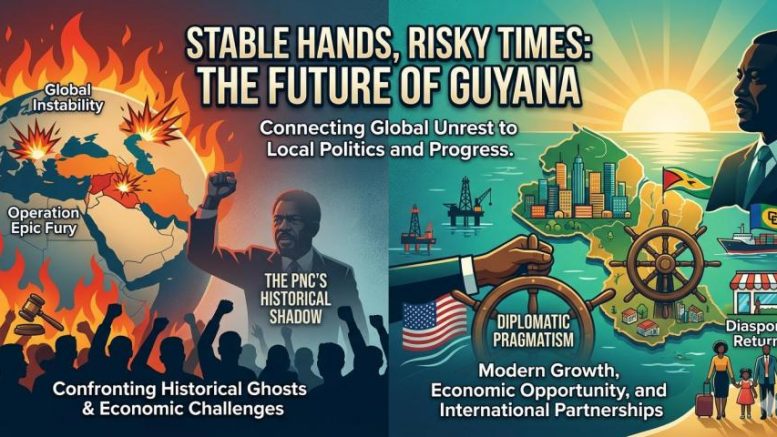
A World on the Brink: Global conflicts and the Ramadan crisis.
A full-scale war has erupted in the Middle East, and all indications are that life and society in the region are about to deteriorate. The usual experts will line up on global television networks to speculate how long this conflict will last and what an endgame will look like. The truth is that no one can accurately predict the real impact of “Operation Epic Fury.”
Governments in the UAE, Qatar, Jordan and Bahrain, all hosts to US military bases, are warning citizens to stay indoors and avoid public gatherings. The cruel irony is that, for the vast majority of people in the region, this crisis is unfolding in Ramadan, a time when families and communities normally come together to break the fast and worship at night.
The Ripples at Home: Why Guyana cannot afford isolation.
Guyana has no direct stake in this conflict or the one that is engulfing Pakistan and Afghanistan, yet we are not fully insulated from its fallout. Disruptions to trade and commerce are almost certain, and those will ripple through our economy and affect our livelihoods.
I am grateful that we have a pragmatic president and an experienced cabinet at the helm, steady hands to steer our national ship through rough seas. I don’t mean this as a partisan flourish, but a sober question. Even if you voted for the opposition, can you seriously imagine Azruddin Mohamed, Terrence Campbell, or Aubrey Norton credibly safeguarding Guyana’s security and economic interests in an increasingly hostile world?
Confronting the Ghosts: The PNCR and the shadow of Forbes Burnham.
Consider Norton’s unreserved praise for Forbes Burnhman during the PNCR’s commemoration of his 103rd birth anniversary. Norton pledged to honour and uphold Burnham’s legacy, stating that his party will conduct a series of public education exercises to contradict the leader’s negative image.
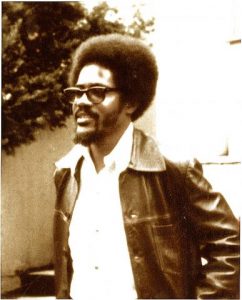 I hope Norton and his team, so enamoured of Burnham, will include in that public education, the findings of the 2016 Commission of Inquiry (CoI), which concluded that the killing of Dr. Walter Rodney on June 13, 1980, was organised by the PNC government and that Burnham “knew of the plan and was part of the conspiracy to assassinate Dr. Rodney.”
As a student at Queen’s College in the late 1970’s, we were aghast at the horrific killing of Jesuit priest Bernard Darke by the House of Israel members closely associated with the PNC. Norton’s PNC should explain as well why the best and brightest of our country fled to greener pastures. Why is it that there are as many Guyanese abroad as there are at home?
Include this nugget as well: Burnham was head of government when soldiers killed two opposition polling agents in 1973. We remember them as “Ballot Box Martyrs,” which is why, not surprisingly, fear gripped our nation in the days, weeks and months following the March 2, 2020, elections. And it is why, six years later, we are still hearing shocking eye-witness evidence in Magistrate Faith McGusty’s courtroom about the extent to which the PNCR and its partners were willing to go to tear up democracy in Guyana.
While Norton and Campbell are busy resurrecting the ghost of a dictator, who Dr. Rodney described as being responsible for the country’s “darkest period” after independence, a spoiled brat of a billionaire who can’t seem to find his way out of Magistrate Judy Latchman’s courtroom came along and, in three months, convinced core supporters of the PNCR that he is more worthy of their vote. One hundred and nine thousand of them dropped the PNCR and voted for We Invest in Nationhood (WIN). Teach that.
The Architecture of Prosperity: President Ali’s pragmatic diplomacy.
Meanwhile, President Ali marked Guyana’s 46th Republic anniversary with a speech that affirmed to the nation that the PPP/C is determined to create as many pathways to prosperity for every Guyanese as necessary. Under the leadership of President Ali, thousands of those who fled Burnham’s “totalitarian” and “racialised” state have returned home, with many more to follow in the coming years.
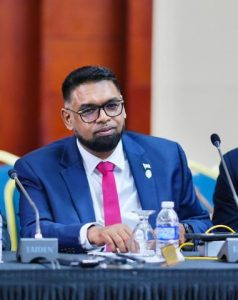
President Ali at CARICOM Meeting (picture from his Facebook)
President Ali then left Guyana to attend the 50th CARICOM Heads of Government meeting in St. Kitts and Nevis. On the sidelines of that meeting, he met with the President of Suriname, the Prime Minister of Jamaica, still reeling from Hurricane Melissa, and the host country’s leadership.
And since President Ali is observing the fast of Ramadan, he even took time out to visit the St. Kitts Islamic Centre in Basseterre, breaking his fast, praying with the community, and describing the immense strides Guyana has made, inviting Guyanese expats there to return home or consider investing in Guyana.
And to illustrate just how committed this president is to the best interests of Guyana, he met with US Secretary of State Marco Rubio to discuss regional security, narco-trafficking, irregular migration, and cooperation on economic and energy security within the renewed US-CARICOM partnership. President Ali and Trinidad’s PM Kamla Persad-Bissessar accepted an invitation to participate in a meeting in Miami on March 7 with President Donald Trump.
In an uncertain world, that’s what political pragmatism looks like. President Ali is not a leader in thrall to ideology. He is prepared to test ideas, discard what fails, and scale up what works, rather than gamble Guyana’s future on slogans or strongmen. In the months ahead, as wars rage abroad and the vanguard of the PNCR stirs old ghosts at home, a steady, disciplined cast of mind may prove to be our greatest asset.
Opinion first published in Guyana’s Sunday Chronicle, March 1, 2026