Georgetown, Guyana: The celebration of the birth of Prophet Muhammad, God’s peace and blessings be upon him, is a national holiday in Guyana since the early years after the nation’s independence and is a special time for Muslims around the world, as it certainly is for Muslims in Guyana. In some parts of the world, it is referred to as Eid Milad-an-Nabi, which simply means “Celebration marking the birth of the Prophet.”
At well over a hundred masjids in our country, Muslims will be exhorted on Tuesday to emulate the Prophet’s lofty character and his noble qualities that made him one of the most consequential figures in the last one and a half millennia. It will also be an opportunity for imams and community leaders to reflect on the challenges Muslims face in various parts of the world.
In most cases, the plight of Muslims is in the places one would most expect it – the occupied Israeli territories of Gaza and the West Bank, Sudan, Afghanistan and, of course, Iran, the Gulf States and Yemen. But just last week, the New York Times surprised readers with an extensive reportage centred on the experience of Muslims living in the State of Texas.
Despite building one of the United States fastest-growing and most institutionally established Muslim communities, Muslims in Texas, estimated to be about half a million, are facing an organised wave of anti-Muslim politics.
As the community expanded in the last two decades, due largely to immigrants coming from all parts of the world, so too did Muslim houses of worship.
In the Dallas–Fort Worth area alone, the number of mosques tripled, going from 28 in 2000 to 76 in 2020. But with the growth of these spiritual sanctuaries came threats, harassment, and hostility that have not been limited to rhetoric.
What I found surprising is that the hostility against Muslims is not only fueled by online hate groups and isolated armed militias, but it is often coming from individuals who happen to hold political office. Some Texas lawmakers, the NYT reported, are promoting Islam, not as a religion but as a political ideology.
Removing Islam from the category of faith only serves to open the door to regulate and restrict Islamic practices in a clear violation of First Amendment protections. In doing so, they’ve made halal businesses and Muslim civic participation into evidence of a coordinated “takeover” of Texas. It is ludicrous, of course, but these are the kinds of imagined cultural threats that are being dangled as bait for anxious voters.
On the other side of the Atlantic, the story is hardly any different. In fact, it is a whole lot worse. According to a 103-page report earlier this year by the UK’s Islamophobia Response Unit (IRU), acts of hate targeting Muslims surged 377 per cent in the first year of Israel’s unprecedented bombardment of Gaza. Majid Iqbal, CEO of the IRU, said that the numbers shattered the myth that Islamophobia is declining. “Discrimination has embedded itself within our institutions,” he said.
According to Deutsche Welle (DW), anti-Muslim racism in Germany two months ago is now a mainstream phenomenon. Citing a 90-page report by the Coalition Against Islamophobia and Anti-Muslim Hostility (CLAIM), there were over 4000 anti-Muslim incidents across Germany in 2025, an increase of more than a thousand over the previous year. They range from homicides and physical assaults to verbal attacks. There were 61 attacks on Mosques and a slightly higher number of attacks on religious institutions.
And yet in this atmosphere of unprecedented hatred, a new generation of Muslims is finding solace by emulating the Sunnah (life example) of the Prophet Muhammad in times of tribulation. The Qur’an portrays him as the very embodiment of tranquillity and unshakable composure, someone who, in colloquial terms, never lost his cool, even with enemies at his heels.
Forced to flee the city of his birth for distant Madina, the Prophet Muhammad and his closest companion, Abu Bakr, sought refuge in a cave as assassins dispatched by Mecca’s ruling elite closed in. At its entrance, tradition relates, a spider spun a web so undisturbed that their pursuers assumed no one could have entered it.
Years later, Prophet Muhammad returned to Mecca at the head of an army of 10,000. The very elites who had driven him from his birthplace, waged war against him, and tortured and killed his companions now fled to the surrounding mountains, fearing for their lives.
As their curiosity got the better of them, they began to slowly assemble around him at the Ka’ba. Had it been the rulers of the Roman and Persian Empires, the dominant political paradigm of the age, execution would have been the norm.
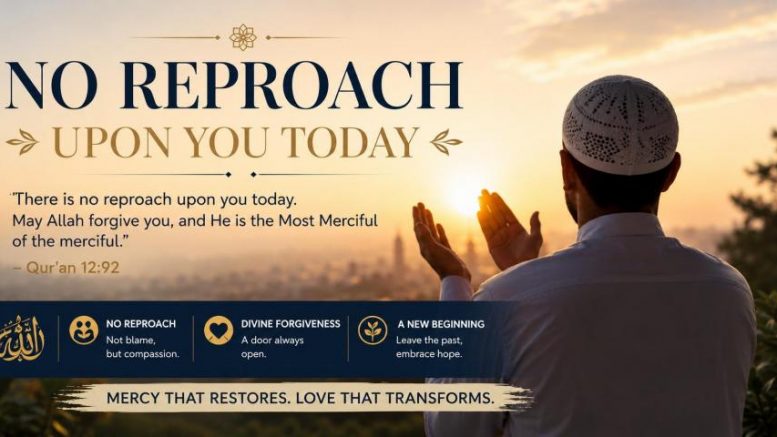
According to traditional accounts of the Conquest of Mecca by Muslim historians, the Prophet Muhammad addressed his enemies with words echoing Prophet Joseph in the Qur’an: “No reproach shall be upon you today. Go, for you are free.”
That example of mercy in victory remains the Prophet’s enduring answer to hatred. At a time when Muslims confront suspicion, violence and efforts to deny the legitimacy of their faith, his life offers neither passivity nor bitterness, but courage tempered by dignity, principle and forgiveness.
This column was first published in the Sunday Chronicle on August 23, 2026.