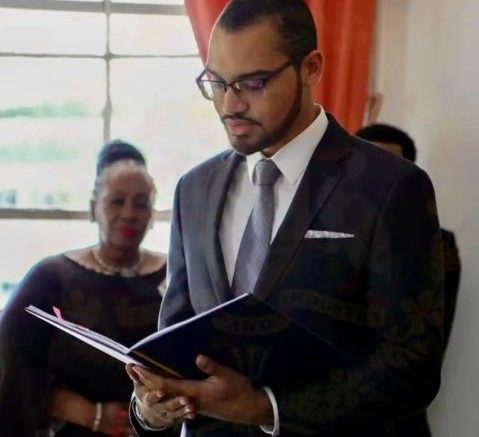
Barbados’ newly appointed and youngest Senator, Khaleel Kothdiwala, made his debut in the Upper House on November 5th 2026. Here, our Barbados correspondent Suleiman Bulbulia reflects on the momentous achievement.
Bridgetown, Barbados: There are moments in a nation’s history when an individual achievement becomes something much greater than the person who accomplished it. It becomes a moment of reflection, a moment of pride, and an opportunity to recognise how far we have travelled as a people.
I was honoured to witness in person such a historic moment on Wednesday, November 4, 2026, with the debut appearance of Senator Khaleel Kothdiwala in the Senate of Barbados following his appointment and swearing-in to that post on October 27, 2026
At age 23, Khaleel has made history as the youngest person ever appointed to the Senate of Barbados, the first Muslim, and the first person of Gujarati origin to serve in the Upper House. His appointment matters not only to him and his family, but also to the Muslim community, the Gujarati diaspora, and wider Barbadian society.
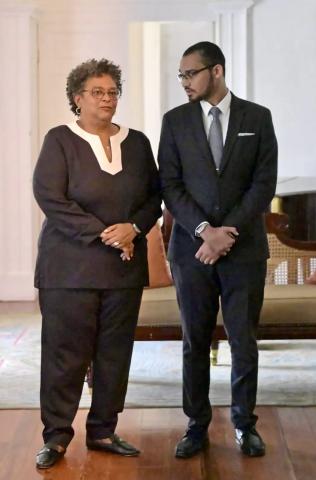
Prime Minister of Barbados Mia Mottley with Senator Khaleel
As a Barbadian Muslim, I cannot help but reflect on the historical significance of this achievement.
Barbados has one of the oldest parliamentary traditions in the Western Hemisphere. Its Parliament has been central to our nation’s political and constitutional development for centuries.
Yet, the story of the Gujarati community in Barbados is relatively recent.
The first Gujaratis arrived in Barbados in 1929. They came from India, leaving behind their villages, families and familiar surroundings in search of economic opportunities and a better life. Among those who followed were Khaleel’s paternal grandparents, who arrived in Barbados during the mid-twentieth century.
Imagine that journey.
A couple leaves India, crosses the oceans and settles in a small Caribbean island. They work, build a life, raise a family and contribute to the society in which they have made their home. Generations later, their grandson enters the Senate of a country whose parliamentary traditions are centuries older than the community to which his family belongs.
I find that story deeply moving.
It reminds us that Barbados’s history is not static. It is a living story, continually enriched by the contributions of people from different backgrounds who have come to call this island home.
A Moment of Pride and Reflection
For many of us in the Muslim community, Khaleel’s appointment is a moment of immense pride.
Muslims have been part of Barbados for well over a century. Our community has contributed to commerce, education, philanthropy, religious life and national development. We have established businesses, built mosques, raised families and participated in the life of this country.
We have always considered ourselves Barbadians.
Yet, until now, no Muslim had been appointed to the Senate.
That is why this moment matters. It is not simply about having a Muslim in Parliament. It is about recognising that our community, like every other community in Barbados, has a legitimate place in the national conversation and in the institutions that shape our future.
Khaleel is a Barbadian. He is a Muslim. He is of Gujarati ancestry. These identities are complementary dimensions of who he is, and none should diminish his right or his ability to serve his country.
I believe Barbados’s strength lies in its ability to embrace the diversity of its people. Our different ethnic, religious and cultural backgrounds should never be viewed as barriers to national belonging.
Indeed, our nation is stronger when its institutions reflect the diversity of the people they serve.
The Reaction to His Appointment
The public reaction to Khaleel’s appointment has been interesting, to say the least.
There have been many encouraging comments, congratulations, and words of support. These have come from Barbadians across the religious, ethnic and political spectrum. I have been heartened to see so many people recognise the importance of this historic achievement.
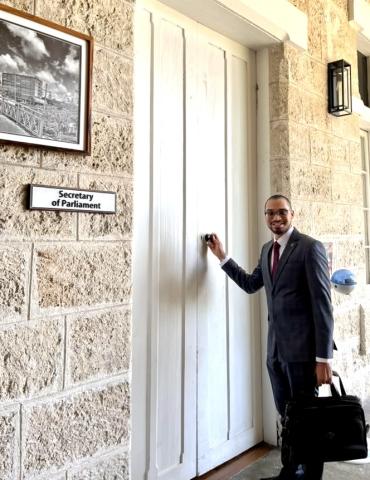 Unfortunately, there have also been discouraging comments that, in some instances, appear to be rooted in prejudice.
I find this troubling.
We live in a country that has long prided itself on its democratic traditions, religious tolerance and commitment to fairness. It is therefore disappointing when a young Barbadian’s appointment to public office becomes an occasion for questioning his place in our society because of his religion or ancestry.
Let me be clear: Khaleel, like every other parliamentarian, must be held accountable for his performance. His views, contributions, conduct and decisions are all legitimate subjects for public scrutiny.
But his religion and ancestry should never be the basis for questioning whether he belongs.
We must distinguish between legitimate criticism and prejudice. The former is essential to democracy; the latter has no place in a society that aspires to be inclusive and just.
I would ask those who have expressed such sentiments to reflect on our own history. Many of the communities that now constitute the fabric of Barbadian society were once newcomers. Their descendants have become an integral part of this country.
The question is not whether Khaleel is Barbadian enough to serve. The question should be whether he will serve Barbados with integrity, competence and commitment.
That is the standard we should apply to everyone.
Faith, Ancestry and the Journeys of Our Grandparents
One aspect of Khaleel’s maiden address that particularly resonated with me was his acknowledgement of the Almighty and his recognition of the sacrifices and journeys of his ancestors on both sides of his family.
He expressed gratitude to the Creator and acknowledged his paternal ancestors, who came from India, as well as his maternal grandmother, whose roots were in Saint George, one of Barbados’s central parishes.
His maternal grandmother subsequently migrated to the United Kingdom in search of better opportunities.
I was especially pleased to hear him make these acknowledgements.
As Muslims, we are taught to be grateful to the Almighty and to recognise the sacrifices and contributions of those who came before us. Our faith reminds us that whatever achievements we attain should be approached with humility and a sense of responsibility.
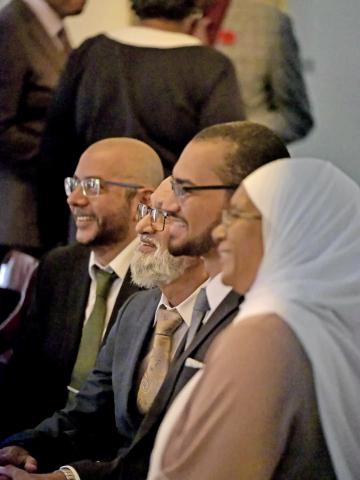
(R to L) Senator Khaleel’s mom, Aqeela Wood, his dad, Mohammed Ali Kothdiwala, and brother Zaheer
But what struck me most was the significance of his grandparents’ journeys.
On his paternal side, his grandparents left India and came to Barbados in search of economic opportunities. On his maternal side, his grandmother left Saint George, Barbados, and migrated to the United Kingdom in pursuit of a better life.
Two different journeys. Two different destinations. Yet both driven by the same fundamental human aspiration: the desire to create better opportunities for oneself and one’s family.
And now, generations later, their grandson has become the youngest person in Barbados’s history to enter the Senate, the first Muslim, and the first person of Gujarati origin to serve in that institution.
I find that story profoundly moving.
It reminds us that one generation’s achievements are often built on another’s sacrifices. Those who leave their homes, cross oceans and begin anew may never fully appreciate the opportunities their descendants will eventually enjoy.
Khaleel’s acknowledgement of his grandparents was therefore more than a gesture of gratitude. It recognised the human stories behind his historic appointment.
His family’s story brings together India, Barbados and the United Kingdom, reflecting the migration experiences that have shaped so many Caribbean families.
For me, this is an important message. We can honour our ancestry while staying fully committed to the country where we were born and raised. We can recognise the sacrifices of those who came before us while embracing our responsibility to contribute to the society in which we live.
Khaleel’s story powerfully illustrates this reality.
The Irony of Immigration and Citizenship
A striking irony marked the proceedings of Khaleel’s first appearance in the Senate.
The legislation being debated concerned Immigration and Citizenship.
I could not help but reflect on its significance.
Here was a young Barbadian of Gujarati ancestry, whose paternal grandparents had migrated from India to Barbados during the mid-twentieth century, now participating in the debate on legislation dealing with immigration and citizenship.
The symbolism was powerful.
The Gujarati experience in Barbados is itself a story of migration, settlement, adaptation and belonging. It is a story of people who came in search of opportunity, established themselves, raised families, and contributed to the country’s development.
Our own history reminds us that migration has played an important role in shaping Barbados.
The debate on immigration and citizenship is undoubtedly an important one. Every country has a responsibility to determine its immigration policies and establish the rights and obligations of those who seek to live within its borders.
But such discussions must also be informed by an appreciation of our history and an understanding that the descendants of immigrants can become integral parts of the societies in which their ancestors settled.
Khaleel’s presence in the Senate is a living illustration of that reality.
A Message to Young Barbadians
Perhaps one of the most important aspects of Khaleel’s appointment is the message it sends to young people.
We often speak about the need to involve young people in national development. We encourage them to become leaders, participate in public life, and contribute to Barbados’s future.
But how often do we provide them with meaningful opportunities to do so?
Khaleel’s appointment demonstrates that age need not be a barrier to public service. It shows that young people can be entrusted with significant responsibilities and can contribute to the highest levels of national decision-making.
I must also commend the visionary leadership of Prime Minister Mia Amor Mottley. Her decision to appoint Khaleel reflects a willingness to look beyond age and recognise the ability, potential and promise of a young Barbadian.
It takes vision and confidence to entrust someone so young with the responsibility of serving in the Senate, particularly when that individual is making history on several fronts.
For me, this is an important demonstration of leadership. It is not simply about identifying those who have already established themselves, but also about recognising potential in those who are emerging and giving them opportunities to show what they can contribute.
Prime Minister Mottley’s decision sends a powerful message to young Barbadians: your age does not define the limits of your ability, and your contribution to national development should not have to wait until you reach a particular stage in life.
I believe this is the kind of leadership our country needs. We must be prepared to create opportunities for young people, trust them with responsibility and allow them to participate meaningfully in shaping the future of our nation.
I also hope that Khaleel will recognise the responsibility that accompanies this historic moment.
He now has an opportunity to demonstrate that leadership is not about the title one holds, but about the contribution one makes. He has an opportunity to bring the perspectives of a younger generation into national discussions, advocate for issues that matter to Barbadians, and serve with integrity and humility.
I wish him well in this important undertaking.
A New Chapter in the Barbadian Story
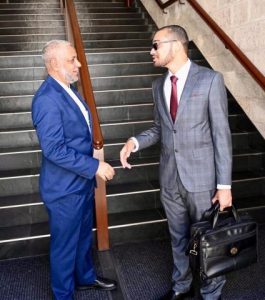
Senator Khaleel with Suleiman
As I reflect on Khaleel Kothdiwala’s appointment, I am reminded of the remarkable journeys that have brought his family to this moment.
Less than a century after his Gujarati ancestors first arrived in Barbados, their descendant has entered one of the oldest parliamentary institutions in the Western Hemisphere.
For the Gujarati community, it is a moment of pride. For the Muslim community, it is a historic breakthrough. For young Barbadians, it is a source of inspiration.
And for Barbados, it is a reminder that our national story continues to evolve.
I hope that we will embrace this moment not simply as an occasion to celebrate an individual, but as an opportunity to reaffirm our commitment to a society in which every Barbadian, regardless of religion, ethnicity, ancestry or age, has the opportunity to contribute to the development of our nation.
I am proud to see this historic milestone.
I am proud that a young Muslim Barbadian has been entrusted with this responsibility.
And I am hopeful that Khaleel’s appointment will help to open doors for others who may one day follow.
May Allah grant him wisdom, integrity, humility and the strength to discharge his responsibilities with distinction.
Barbados is our home. Its future belongs to all of us. And its story is still being written.