
The full transcript from Friday’s Khutbah by Shaikh Ahmad Kutty, containing some beautiful examples of love and mercy in families.
Khutbah – Friday, September 11, 2026.
O Allah, to You belong all praises as it befits Your glory and majesty. We cannot thank You enough for Your blessings. We seek Your help and assistance; We beg Your mercy and forgiveness. We bear witness that You are One and have no partner. We also bear witness that Muhammad ﷺ is Your servant and Messenger. You sent Him as a mercy for the worlds.
Let us send peace and blessings on the Messenger of mercy, our mentor Muhammad ﷺ, the son of Abdullah, his family and companions and all those who walk in their footsteps until the end of time.
Servants of Allah, I advise myself and you to hold fast to Taqwa, to live in conscious submission to the One who witnesses our every moment, and before whom we will one day stand.
Be mindful of Allah everywhere, but above all, within the walls of your own homes. It is there, away from the eyes of the world, that our true character is tested and revealed.
My dear brothers and sisters,
Where is one of the hardest places to practise the Sunnah?
Perhaps it is not the masjid.
It is easy to smile at strangers and lose patience with our families. It is easy to speak gently in public and raise our voices behind closed doors. We may appear deeply religious to others while those closest to us experience another side of us.
That is why the Prophet ﷺ gave us this remarkable measure of character:
“The best of you are those who are best to their families, and I am the best of you to my family.”
He took the test of Islam home.
So ask yourself:
What version of me does my family experience?
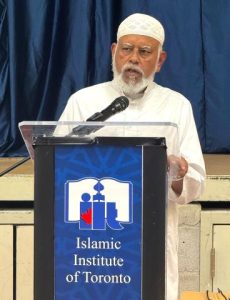
Shaykh Ahmad Kutty
If our children were asked, “What does Islam feel like in your home?”—what would they say?
Would they speak of mercy, patience, forgiveness, and love?
Or mainly of anger, criticism, and fear?
Correct the Behaviour, Without Crushing the Heart
A happy family is not a family without mistakes.
Your spouse will sometimes disappoint you. Your children will frustrate you. Your parents may misunderstand you.
And you will make mistakes too.
Once, while the Prophet ﷺ was with one of his wives, a dish of food was sent from another household. In a moment of jealousy, the dish was struck and broken.
Imagine that happening in our homes.
The plate crashes. Food spills. Tempers rise. Suddenly one broken plate becomes an argument about ten years of grievances.
He said, “Your mother became a little jealous”.
And then, the Prophet ﷺ calmly gathered the food and broken pieces. The damage was addressed, but the person was not humiliated.
There is a beautiful principle here:
Correct the behaviour without crushing the heart.
Before your next argument, ask yourself:
Do I want to solve the problem, or do I want to defeat the person I love?
Because sometimes we win the argument, and lose the heart.
Put Down the Phone and Notice
We may be the most connected generation in history and yet one of the most distracted.
We can know what someone thousands of kilometres away is doing, yet fail to notice that the person sitting beside us is hurting.
The Prophet ﷺ noticed people.
He even knew from ʿĀʾishah’s words when she was pleased with him and when she was upset.
That means he was paying attention.
Your child comes home unusually quiet.
Your spouse looks exhausted.
Your elderly mother calls not because she needs anything, but because she wants to hear your voice.
Put the phone down.
Look at them.
Listen.
Sometimes those we love do not need another lecture.
They need someone to notice that they are hurting.
And do not make them guess that you love them.
Tell your spouse, “I appreciate you.”
Tell your parents, “Thank you.”
Tell your children, “I love you. You matter to me.”
A child can have a beautiful house, the latest phone, and everything money can buy, and still quietly wonder:
“Am I really loved?”
A home is not built only with money.
It is built with smiles, embraces, appreciation, forgiveness, and the reassuring feeling:
“I belong here.”
Before Correcting, Connect
The Prophet ﷺ once noticed the sadness of a little boy, Abū ʿUmayr, whose little bird had died.
To an adult, it might seem trivial.
But not to the child.
And because it mattered to the child, it mattered to the Prophet ﷺ.
Parents, remember this:
What seems small to you may be enormous to your child.
Instead of saying, “That’s nothing,” say:
“Come. Tell me what happened.”
Before correcting, connect.
Before lecturing, listen.
Before judging, understand.
Our children may forget many of our lectures.
But they may never forget whether they felt safe telling us the truth.
When Our Parents Become Helpless
And now, my brothers and sisters, think of the other end of family life.
Think of our ageing parents.
Once you were helpless.
Your mother carried you before you could walk. She fed you before you could feed yourself. She stayed awake when you were sick.
Your father worked, worried, sacrificed, and exhausted himself so that you could stand where you stand today.
But years pass.
The strong father becomes frail.
The mother who once carried you may now need your arm simply to walk.
The hands that fed you may tremble.
The eyes that watched over you may grow dim.
The parent who patiently answered your childhood questions may now repeat the same story again and again.
And Allah says:
“If one or both of them reach old age in your care, never say to them even ‘uff’ … but speak to them with respect. And lower to them the wing of humility, out of mercy, and say: ‘My Lord, have mercy upon them, as they raised me when I was small.’”
(Q 17:23–24)
Brothers and sisters:
Now it is our turn.
They were patient when we were helpless.
Now we must be patient when they become helpless.
Slow down when they walk slowly.
Repeat yourself when they cannot hear.
Listen when they tell the same story.
Take them to their appointments.
Sit beside them when they are lonely.
Feed them if they cannot feed themselves.
And whatever happens,
never make them feel that they have become a burden.
They did not consider you a burden when you needed them.
Do Not Miss Your Door to Jannah
The Prophet ﷺ gave a severe warning concerning the person who reaches the time when one or both parents have grown old yet fails to enter Paradise through serving them.
Think about what that means.
Your elderly mother may be a door to Jannah.
Your ageing father may be a door to Jannah.
Every meal you bring them.
Every appointment you take them to.
Every gentle word.
Every moment when you swallow your irritation.
Every kiss on an ageing forehead.
Allah sees it.
Do not wait until the hospital bed to discover how precious your mother was.
Do not wait until the janāzah to wish you had spent more time with your father.
One day his chair may be empty.
One day you may reach for the phone to call your mother, and suddenly remember:
there is no number you can call anymore.
You may then give everything you own just to hear that familiar voice say your name one more time.
So serve them while you still can.
Sit with them while you still can.
Kiss them while you still can.
Ask their forgiveness while you still can.
Seek their duʿāʾ while you still can.
And care for them lovingly until Allah calls them from this stage of their journey to the next.
May they leave this world knowing:
“My children did not abandon me when I became weak.”
The Sunnah of Serving
ʿĀʾishah رضي الله عنها was asked what the Prophet ﷺ did at home.
She said:
“He used to serve his family.”
The Messenger of Allah ﷺ did not consider household work beneath him.
He helped.
He participated.
He served.
Strength is not demanding to be served.
Sometimes strength means serving.
And Allah tells us that He placed between spouses affection and mercy.
Why mercy as well as love?
Because feelings fluctuate.
There will be illness.
Financial difficulties.
Exhaustion.
Ageing.
Disappointments.
Romance alone cannot carry a family through all of this.
Mercy can.
Mercy says:
“You made a mistake, but I will not define you by it.”
“You are sick; I will care for you.”
“You are growing old; I will not abandon you.”
What Will They Remember?
Brothers and sisters,
One day the toys will disappear.
The schoolbags will be gone.
The bedrooms will become quiet.
Our children will grow up.
And one day we will become the elderly parents.
What will our families remember?
Probably not most of the things we bought them.
But perhaps they will remember:
“My father hugged me.”
“My mother listened to me.”
“My parents prayed for me.”
“When I failed, they corrected me without humiliating me.”
“When I came home, I knew I belonged.”
Our families are an amānah, and time is passing.
So do not postpone tenderness.
Do not postpone the apology.
Do not postpone reconciliation.
If you have hurt your spouse, apologize.
If you have become distant from your child, reconnect.
If your mother is alive, call her.
If your father is alive, sit with him.
If siblings are not speaking, take the first step.
Do not say:
“Why should I call first?”
Someone must choose Jannah over pride.
Why not you?
Five Take-Home Lessons
Before we leave today, remember five things:
First: Give your family the best of your character, not whatever patience remains after everyone else has received the best of you.
Second: Correct without humiliating. Correct the behaviour without crushing the heart.
Third: Before correcting, connect. Put down the phone, listen, notice, and make love visible.
Fourth: If your parents are still alive, recognize the treasure Allah has left in your hands. Serve them as doors to Jannah before those doors close.
Fifth: Make your home a place where Islam is not merely taught, but felt as mercy.
Closing Duʿāʾ
O Allah, fill our homes with love, mercy, patience, and forgiveness.
O Allah, forgive us for every harsh word spoken to those we love.
Heal wounded marriages.
Bring parents and children closer.
Reconcile brothers and sisters.
O Allah, bless our mothers and fathers.
If they are alive, help us recognize their worth before it is too late.
Give us patience to care for them in weakness, as they cared for us in weakness.
Do not let us discover their value only when their chair is empty.
And if they have returned to You, forgive them, shower them with Your mercy, illuminate their graves, and reunite us with them in Jannat al-Firdaws.
O Allah, bless our spouses, our children, and our grandchildren.
Let our homes be homes of ṣalāh, Qurʾān, smiles, forgiveness, tenderness, service, and raḥmah.
And when our children remember us after we are gone, let them be able to say:
“We did not merely learn Islam in our home.
We felt its mercy there.”
Rabbanā hab lanā min azwājinā wa-dhurriyyātinā qurrata aʿyunin wa-jʿalnā lil-muttaqīna imāmā.
Āmīn.
Wa-aqimiṣ-ṣalāh
1. For our homes
اللَّهُمَّ اجْعَلْ بُيُوتَنَا بُيُوتَ مَوَدَّةٍ وَرَحْمَةٍ وَسَكِينَةٍ.
Allāhumma ijʿal buyūtanā buyūta mawaddatinwa-raḥmatin wa-sakīnah.
O Allah, make our homes homes of love, mercy, and tranquillity.
2. For our parents
اللَّهُمَّ ارْحَمْ وَالِدَيْنَا كَمَا رَبَّوْنَا صِغَارًا.
Allāhumma rḥam wālidaynā kamā rabbawnāṣighārā.
O Allah, have mercy on our parents as they cared for us when we were small.
3. For our spouses and children
رَبَّنَا هَبْ لَنَا مِنْ أَزْوَاجِنَا وَذُرِّيَّاتِنَا قُرَّةَ أَعْيُنٍ.
Rabbanā hab lanā min azwājinā wa-dhurriyyātinā qurrata aʿyun.
Our Lord, grant us joy in our spouses and children.
4. For reconciliation
اللَّهُمَّ أَصْلِحْ ذَاتَ بَيْنِنَا، وَأَلِّفْ بَيْنَ قُلُوبِنَا.
Allāhumma aṣliḥ dhāta bayninā, wa-allif baynaqulūbinā.
O Allah, reconcile us and unite our hearts.
5. For a lasting family legacy
اللَّهُمَّ اجْمَعْنَا وَأَهْلَنَا فِي الْفِرْدَوْسِ الْأَعْلَى.
Allāhumma ijmaʿnā wa-ahlanā fī al-Firdaws al-Aʿlā.
O Allah, reunite us and our families in the highest gardens of Paradise.
Āmīn, yā Rabb al-ʿālamīn.
First published in Farhad Khadim’s Substack.