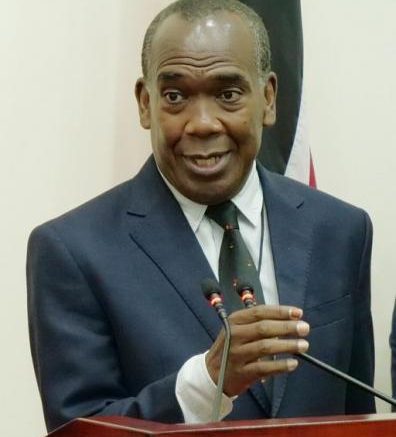
PORT-OF-SPAIN, Trinidad: Attorney General John Jeremie has designated three international organisations as terrorist entities under Trinidad and Tobago’s Anti-Terrorism Act, triggering immediate legal action to freeze any local assets linked to the groups.
Following the Attorney General’s applications, the High Court issued orders between April 8 and 9 mandating the freezing of all property associated with Hezbollah, Hamas and Iran’s Islamic Revolutionary Guard Corps (IRGC).
The measures apply to all assets owned or controlled by the organisations, whether directly or indirectly, and extend to holdings through intermediaries or proxy arrangements.
Legal Process and Enforcement
While the designation originates with the Attorney General under the Anti-Terrorism Act, enforcement requires judicial approval. In this case, Justices Carol Gobin and Jacqueline Wilson granted the freezing orders, marking one of the most far-reaching applications of the legislation in recent years.
The designations are subject to statutory review every six months by the Attorney General to ensure continued oversight.
Financial institutions have been directed to comply immediately with the Financial Intelligence Unit, reinforcing obligations across the banking sector.
The move has been viewed as aligning Trinidad and Tobago with the geopolitical positions of the United States and Israel.
The Government has framed the decision as a preventive measure aimed at safeguarding the financial system and limiting exposure to extremist networks.
Debate Over Transparency and Motive
The decision has sparked criticism from some legal observers, who question the lack of publicly available intelligence to support the designations.
Concerns have also been raised about whether the move reflects independent national security assessments or alignment with foreign policy positions of larger powers.
Community Concerns and Social Impact
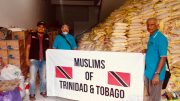
Muslim organisations have expressed alarm over the potential for stigma and unintended consequences. Groups warn the designation could affect charitable funding and deepen negative perceptions of Muslim communities.
Emergency meetings were held among local Muslim bodies, particularly within the Shia community, to assess the implications of the inclusion of the IRGC.
Mixed Reactions Across Leadership
Government officials have defended the move as necessary for national security, while some opposition figures have criticised the Government’s handling of its decision to designate three Middle Eastern organisations as terrorist entities. In responding to a question in TT’s Parliament, PM Kamla Persad-Bissessar said: “These engagements aligned with T&T’s consistent engagement with the United States of America with respect to matters such as these.”
However, others have cautioned that safeguards are needed to ensure humanitarian aid is not disrupted.
Religious leaders have also urged the Government to avoid importing foreign geopolitical conflicts into Trinidad and Tobago’s domestic space without clear evidence of local threats.
Preventive Security vs Social Cohesion
Security experts say the designation is less about immediate threats and more about preventing ideological influence and financial channels linked to extremist groups.
At the same time, they warn that policies must be applied carefully to avoid alienating communities or conflating religion with terrorism.
With the Attorney General expected to review the designations in the coming months, the decision is set to remain a focal point of national discussion, balancing security priorities against transparency and social cohesion.