A Nation Speaking With Confidence
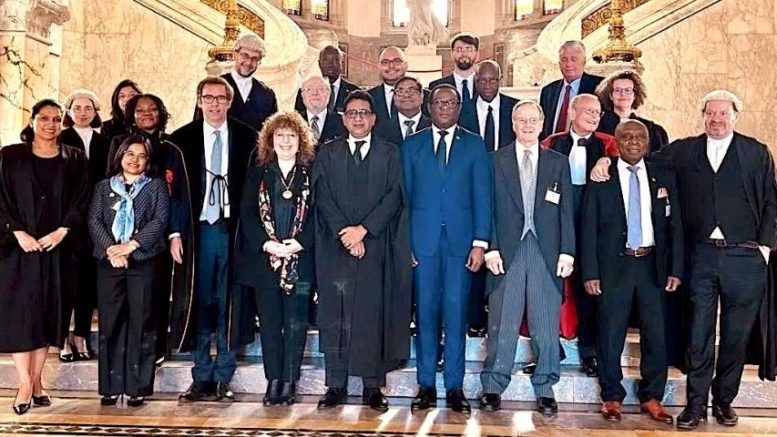
Guyana’s week at the International Court of Justice felt like a turning point, not just in a long-running border controversy, but in the way we see ourselves as a nation. Guyana’s legal team was spectacular, and their names deserve to be etched into our civic memory: Carl Greenidge, Nilufer Oral, Philippe Sands, Pierre d’Argent, Paul Reichler, Anil Nandlall SC and Minister of Foreign Affairs and International Cooperation Hugh Todd.
From the time my generation came of age in the 1970s, Venezuela’s bogus claim to Guyana’s territory has been a nagging distraction, fading in and out of our collective consciousness. The late Dave Martins gave us a kind of national anthem in “Not One Blade of Grass,” a song that anchored our mental resistance, humoured us, and offered a nodal point for patriotism in our thoughts and imagination: “Essequibo is ah we own.”
One Guyana, One National Purpose
When President Irfaan Ali came into office, he approached the Venezuela issue in a way that will go down as the most profound yet, launching a strong national campaign and binding our six peoples into one plan of unity through his “One Guyana” vision, now a powerful public brand and the title of his timely new book.
I still remember cringing at the thought that, 45 years ago, I had to locate my country on the world’s mental map by referring to the 1978 Jonestown tragedy. Thankfully, we turned that corner, as we also turned the corner from being one of the poorest CARICOM nations to a country with new possibilities, and now I look forward to turning another: a clear ICJ ruling that there is only one lawful conclusion from the hard truths and unequivocal evidence before the Court – Essequibo belongs to Guyana, all of it.
A Legal Team for the History Books
Let me explain why I am writing this column in sheer awe of our legal team. Guyana demonstrated beyond a doubt that Venezuela sought, shaped and ratified the 1897 Treaty and the 1899 Arbitral Award, campaigned for U.S. support to secure arbitration, and ratified the arrangements in Caracas; nothing happened behind closed doors to Venezuela’s exclusion, and for six decades up to 1962 it never suggested the process was fraudulent or imposed.
Professor Nilufer Oral, in a masterful presentation, showed that Venezuela produced at least 16 official maps between about 1911 and 1962, all faithfully showing the boundary fixed by the 1899 Award and the 1905 Boundary Agreement, an unbroken cartographic record that, for me, was the single most compelling proof that Venezuela accepted and applied the Award for more than 60 years – a challenge she openly issued to the Venezuelan team, who could not refute her.
Myth, Theatre and the Mallet-Prevost Memo
Then there was the Mallet-Prevost memo, which was allegedly the result of a secret collusion between Britain and Russia. It is mythology, “theatre and fiction” is how Guyana described it. There is no memo. Other than a mention in a 1949 journal article by Otto Schoenrich, it has never been produced. Even if plausible, Venezuela’s claim that British jurist Lord Russell influenced the process over dinner is highly unlikely, given that he was not even a member of the arbitration tribunal.
In Guyana’s submission, the 1966 Geneva Agreement was described as a procedural framework to examine Venezuela’s late claim that the award was null and void, not a device for reopening or redrawing a settled frontier. That interpretation, they reminded the judges, is reinforced by the ICJ’s own 2020 jurisdiction ruling, which defines the “controversy” as Venezuela’s allegation of invalidity – a formulation that only makes sense if the Court assumes the award’s prior existence and continuing legal relevance.
The Evidence of Effective Control
Guyana’s case is anchored in the deeper history of effective control on the ground, stressing that the territory west of the Essequibo and east of the Orinoco was successively administered by the Dutch and then the British, never by Spain or Venezuela. Drawing on archival records and toponyms, Carl Greenidge described how Dutch authorities established settlements, posts and governance structures in the contested zone from the 17th century onward, while there is zero evidence of comparable Spanish or Venezuelan administration, settlement, or state functions there.
Against this record, Venezuela’s reliance on sweeping colonial-era assertions and papal-era lines appears insubstantial; by modern standards of territorial title, Guyana argued, such abstractions cannot substitute for demonstrable and continuous exercise of authority on the land.
The Freedom to Say “Essequibo Is Ah We Own”
I hope that when the ICJ judgment comes, it will grant Guyanese of every generation the quiet, everyday freedom to say “Essequibo is ah we own” without fear or qualification. In my most optimistic moments, I imagine the Venezuelan delegation gathering their files, offering congratulations to Guyana’s team, and returning to Caracas to report to Acting President Delcy Rodríguez that they found no evidence on which to build a case. I do not expect her to unpin that brooch she wore so pointedly at CARICOM and cast it into the Orinoco, but I do dare to imagine something far more valuable: that, on this Diamond Jubilee of our independence, both nations will find the wisdom to step back from theatre and bravado, and allow Guyana to celebrate what we have always known is ours.
This column was first published in the Sunday Chronicle, May 10, 2026