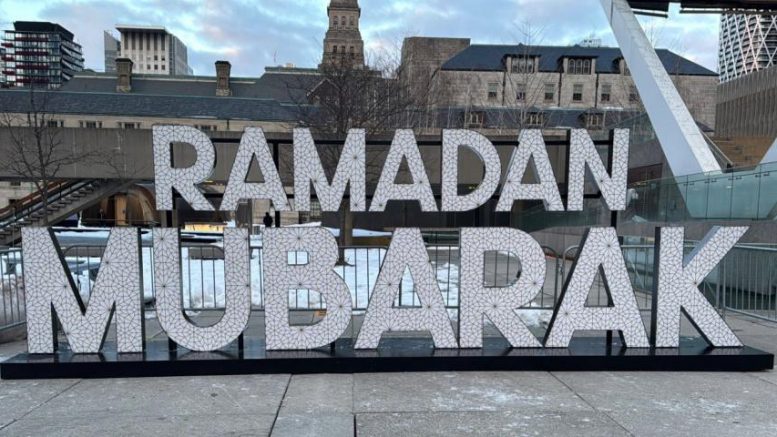
I took a short break from work life in Guyana to spend the latter half of Ramadan with family and friends in Toronto. In these last days of the month, Muslims observe the Night of Power, which the Quran describes as “better than a thousand months,” with prayers, supplications and deep reflection. I had imagined a kind of spiritual retreat, reflecting on esoteric questions in an unusually cold and snowy March; instead, I found myself navigating painful conversations about the United States-Israel war with Iran.
For perspective, the Muslim community in the Greater Toronto Area (GTA) is larger than the entire population of Guyana. Attend any mosque in the GTA at sunset, and the diversity of the community is immediately visible from the variety of dishes prepared for the iftar meal that opens the day’s fast.
Two weeks into the war, and after dozens of one-on-one conversations and public engagements, I’ve yet to meet anyone who is not feeling a sense of anguish and anxiety over the unfolding tragedy.
The Institute for the Study of War estimates that in just the opening days of Operation Epic Fury, the United States and Israel fired several thousand precision‑guided munitions and interceptors at Iranian targets, with US officials later acknowledging roughly 6,000 targets struck across Iran and billions of dollars’ worth of ammunition already expended. Iran’s retaliation, which every expert and then some have predicted would happen, has resulted in the alarming expansion of the theatre of war.
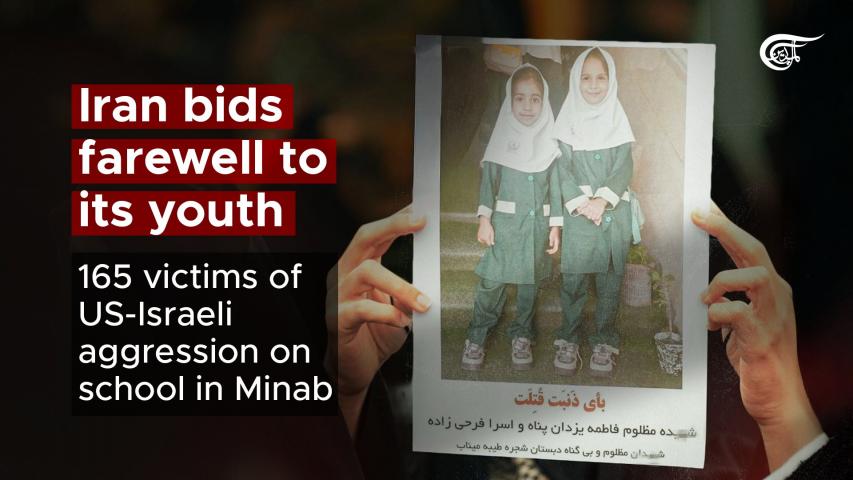
Multiple leading outlets, including the New York Times and Washington Post, now report that preliminary U.S. investigations point to American Tomahawk missiles as the likely cause of the Shajareh Tayyebeh Elementary School for girls in Minab’s “double‑tap” strike. Al-Jazeera and other media outlets have reported that 170 people lost their lives, almost all girls aged 7 to 12. But even though the Pentagon has yet to issue a final public report, President Trump blamed it on Iran.
It is said that wars almost always have unintended consequences. UNESCO says that four of Iran’s 29 World Heritage sites have been badly damaged. They include Tehran’s Golestan Palace, often compared to Versailles and is a testimony to the grandeur of Iran’s civilisation in the 19th century. It, too, holds absolutely no military value. Historic sites in Isfahan and the Khorramabad Valley were also badly damaged.
UNESCO says it shared the coordinates of key cultural locations with all parties and is urgently calling for the protection of heritage sites across Iran and the wider region, stressing that under international law, they must be protected.
There are more questions than answers at this point, each more troubling as the hours and days pass. With Iran’s leadership decapitated, who will negotiate the terms of Tehran’s eventual surrender, if it comes to that? And why launch this war when President Trump campaigned so vigorously on a promise to keep the United States out of costly, open-ended conflicts abroad, especially in the Middle East?
It appears a majority of Americans are blaming Israel’s current leadership, particularly its Prime Minister Benjamin Netanyahu, for dragging Washington into a war with Iran. On March 3, a New York Times headline screamed: “Trump Tries to Quiet Claims Among Supporters That Israel Dragged Him Into War.” According to keen political observers, Trump’s own supporters are telling him to shift the U.S. away from Israel now.
When California Democratic Governor Gavin Newsom was asked whether the United States should rethink its military support for Israel? He dropped a bombshell of an answer, given the fact that he is clearly the front-runner for the Democratic presidential nomination two years from now in an election that his party is favoured to win. “The current leadership in Israel is walking us down that path; I don’t think we have a choice but that consideration,” Newsom said.
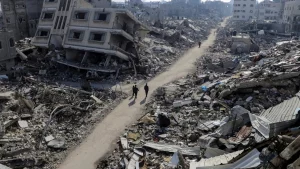
Gaza destruction by Israel
Just two months ago, Newsom had refused to use the word “genocide” concerning Israel’s war on its occupied territory of Gaza, a war that has killed more than 70,000 people, with the body count increasing by the day. The popular governor had said he didn’t know the definition of the word or the legal threshold.
It appears that Newsom now believes Americans deserve a president who will stand up to Israel more than support it. And during his more recent interview, he used the term “apartheid state” with reference to Israel.
Gallup, which has been tracking the America-Israeli relationship vis-à-vis the Palestinians for 40 years, released a poll on February 27, a day before the start of the war, and it alludes to a major shift in American public opinion.
Gallup found that 41% of Americans now say they sympathise more with Palestinians and 36% with Israelis, ending a two-decade pattern. While Israel is still viewed more favourably than the Palestinians, 57% of Americans say they support a two‑state solution, matching near record‑high backing for an independent Palestinian state.
As Muslims observe these cherished nights of Ramadan, they will undoubtedly be praying for an end to this war and to the wider cycle of vengeance it has unleashed. It is only fitting that all the people of Guyana, whatever their faith, join in praying for a just peace and a permanent end to wars and the destruction of human life.
This opinion column was first published in Guyana’s Sunday Chronicle on March 15th, 2026