This article was published in ‘The Message’ magazine in 1990, reviewing the Muslim Communities of the Caribbean Basin’s progress at building a foundation to revive the faith communities in the region and the challenges to be overcome in the 1990s and beyond. Republished here to provide an insight into programs and plans of that era to the current generation.
Historical Background
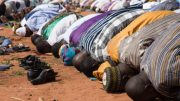
The history of Islam and the presence of Muslims in the Caribbean have been a very unique experience, which needs to be adequately researched and documented. It stretches back over one thousand years, predating European contact by over six centuries. Long before Columbus’s voyages in the 15th century. Muslims from North and West Africa visited, settled, and established viable trade and social relationships with the indigenous American Indian people. A number of sculptures, oral traditions, eyewitness reports, artefacts, and inscriptions have been cited to confirm this. (Dr. Abdullah Hakim Quick of Toronto, Canada, presented a well-researched paper on the topic at the International Islamic Conference in Nigeria last November.)
The second presence of Muslims was slaves, kidnapped by or purchased by European slave traders and transported from West Africa to a “New World” of oppression and inhumanity. Over a period of 300 years, millions of slaves were transported in what must be one of the most barbarous episodes in human history. The fact that many of these slaves were Muslims is beyond doubt. Many of them came from predominantly Muslim African ‘Nations’ such as Mandingo, the Fula, the Susu, and Hausa, and there are indications that some were distinguished scholars of Islam.
Despite slavery and forced separation from Islamic lands and culture, there are reports of Muslim slaves maintaining a form of their faith, leading slave revolts and in some cases regaining their freedom and returning to Africa. The leading force among the Muslim African slaves was the Mandinka, known in the Americas as “Mandingo”. They were found in considerable numbers in Jamaica, Trinidad, St. Vincent, Venezuela, and other Caribbean nations. Many historical reports on the incredible period are now available.
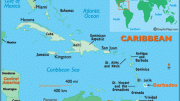
Between 1838 and 1924, a new element was introduced into the Caribbean population through the process of indentureship. Nearly half a million “East Indians”, as they were called, entered the region, mainly in Guyana, Trinidad and Surinam and also in Guadeloupe, Martinique, Jamaica, St. Lucia, St. Vincent, and Grenada. One in six was Muslim; the rest were mainly Hindus. The Dutch introduced these workers from the Netherlands Indies (mainly Java), who were mostly Muslim and settled in Surinam.
The “Indian” Muslims had come primarily from the illiterate class and were forced to coexist with the Hindus. The living conditions were very similar to those of the slaves, and they were severely abused and exploited. They were not able to adequately transport Islamic community life, and they became targets of hostility from every angle. As a result of this atmosphere of hostility, they became very introverted and inward-looking. Self-preservation became the main objective for them, and little or no effort was made to share or to propagate Islam. However, they were able to establish mosques in the main communities in Trinidad, Guyana, Suriname, and Jamaica, around which some aspects of community life were established, primarily from 1865 into the first half of this century.
This period at least resulted in the sustained presence of Muslims in the Caribbean and laid the basis for the Islamic reawakening that has taken root today.
Achievement in the Eighties
The 1980’s can be considered a decade of sober reflection, realism and maturity. After the spontaneous injections of Islamic reawakening throughout the Caribbean in the seventies, Muslims and their communities began to develop their own communities. The sudden growth of Islam and the bombardment of external forces began to subside. This left communities time to reflect on their level of development.
AICCLA
The sincere and dedicated efforts to forge an indigenous movement blossomed as the only viable mechanism to tackle the diverse problems of building Muslim communities in the region. The Association of Islamic Communities of the Caribbean and Latin America (AICCLA) undertook this challenge by initially focusing on the educational and training needs of the communities. Islamic studies and da’wah were offered in every community based on common grounds. A series of three-day ‘in-house’ community programs was conducted, zeroing in on the needs of each community. These programs, involving all Muslims in their communities, were implemented in Grenada, Barbados, Dominica, Jamaica, the Bahamas, and Belize from 1980 to 1985.
Guyana Islamic Trust
Similarly, in Trinidad and Guyana, national conventions were organised by the Islamic Da’wah Movement (IDM) and the Guyana Islamic Trust (GIT). These highlighted the persistent efforts to rejuvenate the existing Muslim communities by organising classes, study circles, seminars, training camps and community involvement in mosques and centres throughout their respective countries. Despite Guyana being the second-poorest country in the region (after Haiti), the GIT has been able to conduct its training programs every year in towns and villages across Guyana. These selfless youths travelled the length and breadth of the country (hundreds of miles) and simultaneously developed parallel programs for young women. They also succeeded in spreading Islam to their fellow Africans. Today, their members are serving as Imams and leaders throughout the country.
Trinidad Islamic Trust/ IDM
In Trinidad, the workers of the Islamic Trust, established in 1975, reorganised and, in 1985, founded the Islamic Da’wah Movement. Many of these workers rose to influential positions in mosques and dormant Muslim organisations. A number of kindergartens for Muslim children were set up in different localities. A much-needed television program, Islam in Focus, was also organised. Also formed were a broad-based Muslim committee to present proposals for constitutional reforms to the government and a special scouting wing for Muslim youth (boys and girls) called the Muslim Youth Brigade.
Muslim Credit Union
One of the most significant developments has been the building of an ‘interest-free’ Muslim Credit Union (MCU). With the efforts of a few dedicated brothers and sisters, the fact of having governmental sanction has become the first successful alternative to the riba-based institutions in the region. At a time when Trinidad and Tobago’s economy is in decline, the MCU has been experiencing spectacular growth – much to the chagrin of other credit unions. Research is underway to establish an Islamic bank in the region. Attempts have also been made to establish institutions in Barbados and, hopefully, in Guyana.
Education & Training
The need for individuals qualified in higher Islamic learning has always been pressing and urgent. To alleviate this, several workers were sent on scholarships to Saudi Arabia, Pakistan and India. Many of them returned in the 80s and have since been helping raise the level of Islamic education in various communities. Indigenous efforts to create viable institutions for higher learning were born out of the two one-year Special Islamic courses conducted in Guyana from 1980-83. The Guyana Islamic Trust (GIT) has begun offering four-year programs in recitation, memorisation, Tafseer, Hadith, Fiqh, biography of the Prophet (peace be upon him) and his companions. Islamic history, Arabic language, comparative religion methodology of da’wah, modern Islamic movement and international affairs. The first batch will be graduating next year, Insha’ Allah.
Belize
The other communities have also seen sustained growth and maturity. The Islamic Mission in Belize has completed an Islamic centre with a full-fledged Islamic Elementary School, the only one in that region with an ongoing Islamic Curriculum. Presently, the school has over 175 Muslim and non-Muslim students and is fully recognised by the Belizean Government.
Jamaica
The Islamic Council of Jamaica has established a much-needed Islamic Centre in Kingston, the capital, and has spread into the countryside by forming four sub-centres, taking da’wah to the masses.
Barbados
The Islamic Teaching Centre in Barbados has undertaken plans to construct an adequate Islamic Centre. In addition to consistent lecture programs at the University of the West Indies (Cave Hill Campus), it has launched a weekly newspaper column and regular da’wah outreach programs for non-Muslims.
The Bahamas
The Jama’at-ul-Islam in the Bahamas has been able to maintain a responsible profile in the ‘eyes’ of society because of its stands on corruption, immorality and the drug problem.
The Smaller Islands
The communities in Grenada, St. Vincent, St. Lucia, Bermuda, Guadeloupe, and Martinique are in a formative stage of reorganising and sustaining their communities.
Jama’at-ul-Muslimeen – Trinidad
In Trinidad, there have been two other noteworthy developments. First, the attempt by Jama’at-ul-Muslimeen, led by Yasin Abu Bakr, to apply Islamic teachings to address social problems in the country. This approach has had a very dramatic impact in motivating many Africans and other youths to return to Islam. In the past year, 60 to 70 people have entered Islam per week. At present, this rate of return to Islam has been declining, but still remains impressive as compared with many other parts of the world. Unfortunately, the Jama’at-ul-Muslimeen has not been able to provide education and training to all these ‘New Muslims`. Many are slowly drifting away again. The IDM had been trying to offer classes to some of these Muslims.
There have also been claims that a few are involved in drugs and petty crimes, but this will have to be substantiated. In July 1989, the Jama’at-ul-Muslimeen hosted a conference organised by the Islamic Call Society of Libya. It has also been reported that a number of key members left for two months ‘training’ in Libya. These disturbing events and the attitude of the leadership of maintaining a posture of confrontation with the government have left the Jama’at-ul-Muslimeen in a difficult position.
Dar-Uloom – Trinidad
The other contribution is the establishment of Darul-Uloom by Mufti Shabil, an Indian-educated Islamic scholar. The Darul-Uloom has quite successfully established an Islamic Institution for the education of children.
The 80’s have surely been a decade of stability and community development. They have provided the basis on which the challenges of the nineties can be tackled.
Other Countries
Attempts have also been made by Muslims in Suriname, Brazil, St. Croix, St. Thomas, Puerto Rico, Panama, Costa Rica, and Colombia to establish strong communities. These small but significant steps to establish a Muslim presence herald a unique future for Islam in this part of the world. Muslims in other parts can benefit tremendously from this experience of starting communities from inception.
Challenges in the Nineties
The new decade will most likely see Islam influencing the lives of Caribbean people in an even greater way. Islam’s impact and resurgence have been watched and awaited by the local churches and governments. The Iranian revolution, the intifada and the Salman Rushdie affair have made Islam a spectacle that is grudgingly admired but still very much feared. For Muslims in the Caribbean, international events have had both a negative and positive backlash that still needs to be properly understood. It is now necessary for Muslims in the region to rise above these imposed images of Islam and accept the responsibility of shaping their destiny and the correct perception of Islam with the help of Allah. No longer should Islam be an incidental entity, but it must now become an acceptable and relevant force for building Caribbean societies. Of course, this cannot be achieved without reflection on our strengths and weaknesses. The following are a few of the many challenges the Muslim community must successfully meet.
Community Development
Community life must be emphasised. In the eighties, we saw an emphasis on educational programs. In the new decade, we must transfer this into meaningful community life. Communities must be established and strengthened so as to successfully face the pressures of the un-Islamic society. We must go back to the early days of the Prophet (peace be upon him) in Medina and note how a community of believers was built through emphasis on the Fara’id (obligatory acts) and the definition of relationships both within and outside the community.
The concepts of specific responsibility, leadership, shura, and adherence to the Shari’ah have to be explored and instituted in a way that is conducive to positive growth and submission to Allah. This inner dimension of Tazkiyyah and Tarbiyah (Purification of character and its moulding and training) must be nurtured with love, mercy and compassion. It cannot be enforced (as shown by the realities in Muslim countries today), but the believers must understand and desire wholeheartedly to serve the cause of Allah. This process must be gradual and tempered with Hikmah (wisdom) so as to attract and utilise human potential in Caribbean societies. The concept of the brotherhood of Muslims and of all human beings is a key to meaningful relationships. The underlying currents of racism in our societies must be neutralised, as it has always proven to be divisive and destructive. A brotherhood that reflects sharing concern and reaching out has to be manifested to build on our natural friendliness and hospitality as Caribbean people. It is only this way that the problems of poverty, drug addiction and the breaking up of families emanating from the encroaching materialism can be defeated.
Community life fosters the practical growth of Islam and lays the foundation for a sustained and meaningful presence in the Caribbean. Our contribution must be to build creative and liberated societies in which our people achieve a sense of identity, purpose, and commitment. We need to realise that we have a valid contribution to make to the rest of mankind after our very unique historical experience.
Relevance
The second challenge facing Muslim communities is how to make Islam relevant to the Caribbean environment. Not much has been done in this area. First, the Islamic literature, from which our understanding is fashioned, is imported from Pakistan, India, the Middle East, and, most recently, North America. Unfortunately, this literature does not reflect our unique historical context, colonial experience, amalgamated Western/Christian societies, and sociopolitical environment. With the experience of Da’wah over the last two decades, a research unit must be established to devise a plan of action and prepare literature to sensitise people about Islam and its ongoing contributions to the region. The sharing and propagation of Islam is dependent on this project.
Our scholars were educated in different parts of the Muslim world and, as such, have brought back divergent views on the Shari’ah and different views on how it should be approached. There is a need to form a council of guidance comprising our “foreign-trained” and local scholars, experienced, qualified workers, and trained specialists in the social sciences. Their task would be to identify issues, do relevant research, and make applicable rulings by going to the original sources – the Qur’an and the Sunnah. The principle of Ijtihad has to be utilised to remain relevant to the unique issues confronting us.
Social, economic and political problems abound in the Caribbean. How far should Muslims go in tackling those problems? In what manner can we prioritize these problems? To what extent should we identify with attempts to alleviate them? How much human and other resources should be channelled into combating them? How can we defend our relationship with other groups and organizations that are confronting these issues without losing our sense of purpose and identity? These are a few of the many questions to be addressed in the 1990s.
Islamic Culture
The Caribbean has been a region of cultural domination with a resultant identity crisis. The European dominance and an infusion of “Americanism” have stripped the indigenous people of a sense of identity and defined values. This has created a situation in many cases wherein Muslims are perceived as not only different but as an alien people in the Caribbean society. “Local” scholars and ‘foreign’ visitors have been guilty of imposing, in many cases unintentionally, these cultural trappings as Islamic culture.
Culture, not limited to dress and external paraphernalia, but particularly focusing on family life, the upbringing of children, and alternative cultural activities in the communities, has to be encouraged. Steps taken by the GIT in this regard are highly commendable, but they need to be expanded to other communities. Family life and children need to be prioritized as they provide the basis for community development.
Economic Dilemma
The reality of the economic situation in the region is grim, with the threat of poverty looming on the horizon. More and more countries are beginning to face a debt crisis; some are at the poverty level, and others are barely surviving. The dependence on foreign capital and markets has created an economic enslavement. Muslims, especially in the newly emerging communities, cannot escape this predicament. It is a fact that much more would have been achieved in the 80s if Muslims were better organized economically. An example of this would have been the expansion of the Guyana Islamic Institute as a regional institution.
One of the bright examples is the Muslim Credit Union in Trinidad. The research towards establishing an Islamic Bank in the region by MCU is crucial in creating capital for investment in the region. But these important pioneering efforts will take time and can yield good results only in countries like Guyana, Trinidad and Tobago, which have large Muslim populations.
In the numerous smaller communities, other strategies have to be developed. The principle of self-reliance that emerged in the 80s must be pursued into the 90s. Much thought and discussion are needed to ensure that this vital area is properly developed.
Recommendations
The following are a few recommendations:
- Communities pool their savings, set up a financial entity and initiate small projects that can sustain the community. Care must be taken to ensure that qualified people are consulted, that projects are viable and that dedicated Muslims are employed. Projects that provide for the needs of the community (e.g. halal foods) should be started.
- Feasibility studies in selected projects should be properly prepared and documented. Attempts should be made to solicit capital from wealthy Muslims in the region or from the growing number of Muslim investment houses mushrooming in the U.S., such as Muslim Savings and Investment (MSI), California and Bait-ul-Maal (BMI), New Jersey. The importance of supporting struggling Muslim communities must be emphasised.
- The problem of Muslim migrating ‘North’ for economic reasons has left many communities without the help, expertise and support that is very much needed. Local people who have lived in the United States and Canada and have established themselves should be encouraged to share their success and experience with their community back home. Trips back to the region should be organized and perhaps even a Muslim Tourism Bureau should be formed. This would provide revenue and a stimulus to many communities. The Caribbean Muslim Support Group of North America (CMSG), formed in June 1983 in New York, can play a crucial role in bridging the gaps. The CMSG presently has contact with Caribbean Muslims in New York, Miami, Chicago, Los Angeles, Baltimore, Toronto and Vancouver, and with members from a variety of countries, Belize, Jamaica, Barbados, Trinidad, St. Kitts, Haiti, Surinam, Costa Rica and Guyana.
Propagation and Da’wah
The challenge of conveying the message of Islam to the people of the Caribbean in a holistic way still needs to be addressed. Over the years, there have been several attempts to deal with this, but by and large, this has remained an individualized effort. The earliest recognizable attempts at detailed planning and organized programs have been the Association of Islamic Communities of the Caribbean and Latin America, and in particular, its member bodies, the Guyana Islamic Trust and the Islamic Trust of Trinidad and Tobago (now evolved into the Islamic Da’wah Movement). This followed the initial contribution of the Islamic Missionary Guild in Trinidad and Tobago.
The Muslim community should also provide direction on how to deal with media propaganda that portrays Islam as an international threat, not as a beneficial unifying force. It needs to provide spiritual and practical guidance on the extent to which Muslims should get involved in public issues such as crime, corruption, drugs, and AIDS, etc.
The writer is the secretary of the ‘Caribbean Muslim Support Group’ in North America and is based in New York City.
Reprinted from ‘The Message’ magazine 1990.